



Every cement worker, mineral processor, and miner has probably heard of the term "mill liner." It comes up in talking points about maintenance, productivity, and operating expenses. The concept, however, might be difficult for novices or people wishing to learn more about it. This article covers the basics in simple terms and the importance of mill liners that most people outside the industry do not realize.
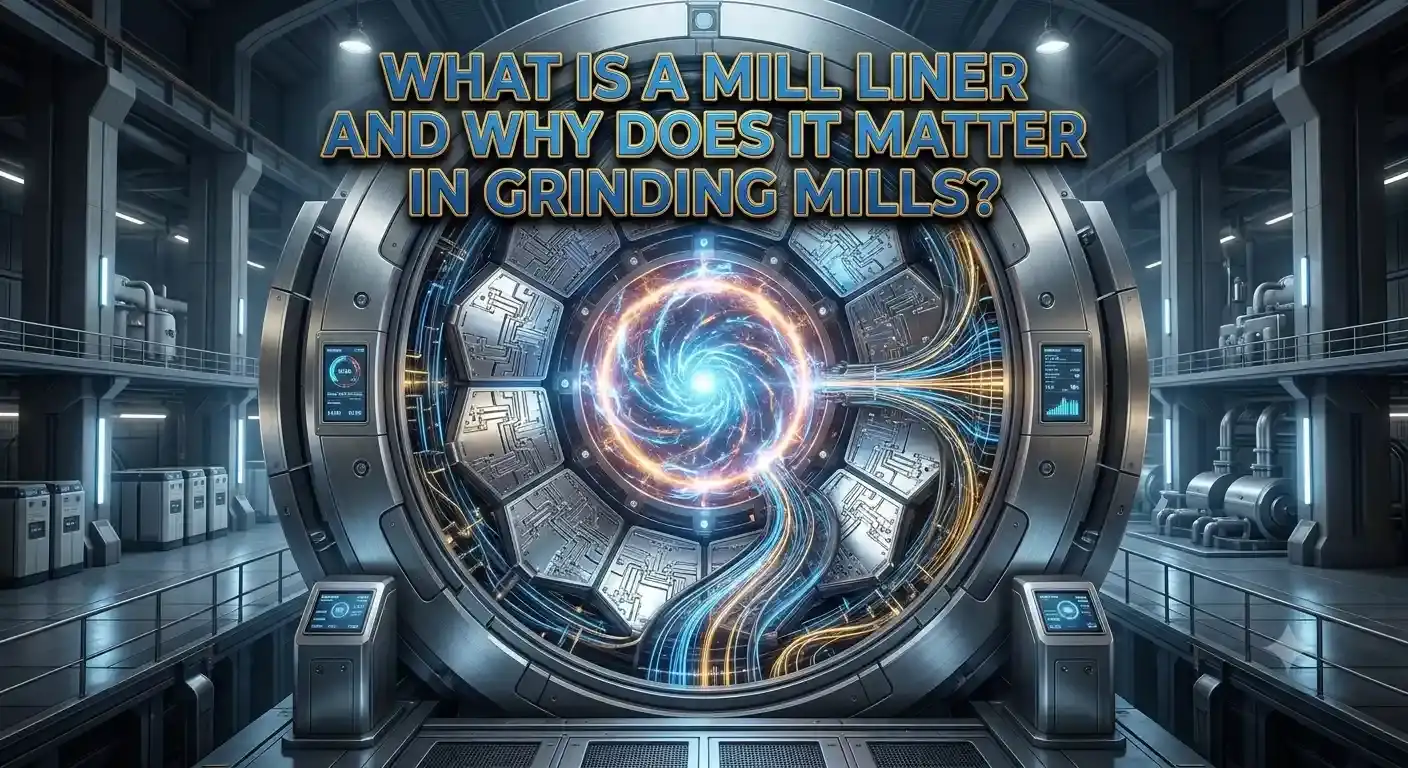
Mill liner is the protective lining used in a grinding mill. A grinding mill is a large rotating cylinder designed to crush and grind materials into smaller particles in the mining and industrial sectors. These mills contain steel balls, rods, or ore, rock, or similar materials for grinding.
The inside walls of a grinding mill take constant punishment. During mill operation, hard ore particles and heavy grinding materials constantly break and scrape the mill shell. The unprotected steel shell of the mill would require rapid replacement. A mill liner is a shell-type liner that can absorb the impact and abrasion from the grinding charge.
A mill liner is equivalent to the inner lining of a drum. The drum continues to spin, and everything inside keeps crashing, but it's the drum lining that suffers, not the drum itself. Change the linen as it goes out of shape, and the drum continues to operate. It is similar to how a mill liner operates in a grinding mill.
There are two things that a mill liner does: First, it helps protect the mill shell from wear and damage. Second, it is for controlling grinding inside the mill. Both of these functions are important.
Protecting the Mill Shell
The mill shell is a major piece of capital equipment. Repair or replacement of a damaged mill shell is very costly and involves very long downtime. Instead, mill liners absorb wear damage. When the liners wear out, they are replaced during planned maintenance standstills. This is substantially cheaper and quicker than repairing structural mill damage.
Liner replacement is a planned activity. Makes linear changes to the operations schedule based on wear-life prediction and maintenance intervals. This will ensure more consistent production and prevent unexpected breakdowns that cause output losses beyond planned maintenance.
Controlling the Grinding Action
This second, less obvious function is crucial. The liner surface shape and the lifter bars' elevation control the movement of the grinding media. During rotation, the liner raises media and ore, which then tumble onto the material below. This falling dissolves the ore.
A smooth, flat surface would not be able to lift the media. The grinding action would be insufficient, and energy would be lost. The liner profile can be designed to provide optimal motion for a mill-ore combination.
The reasons that make mill liners wear out are the harsh conditions inside a grinding mill. Two main forces cause liner wear: impact and abrasion.
• Impact wear is caused by the high-energy impact of the grinding media and the ore on the surface of the liner. Each time a steel ball contacts a lifter bar or liner plate, a hammer blow is imparted. With millions of impacts, the liner material will progressively thin out. The mill speed, the size and weight of the balls, and the hardness of the mineral determine the rate of impact wear.
• Abrasion wear occurs when the surface of the liner is continuously abraded by ore and the grinding media. Hard, sharp ore particles sand the liner material. Abrasion wear occurs during service and is uniform across the entire surface of the liner in contact with the ore. Even the toughest liner materials wear out over time from impact and abrasion. Monitoring and replacing the liner before it reaches the end of its life is an important aspect of mill maintenance.
If liners become worn and are not replaced when necessary, the situation becomes very difficult. Liners wear out as they become thinner. The mill shell is now subject to direct impact and abrasion. This accelerates the degradation of the shell's integrity and could result in expensive structural repairs or shell failure in severe systems.
Grinding liner profiles that are worn also cannot lift and cascade the grinding charge very well. Grinding efficiency drops. The same size reduction is achieved using more energy. Throughput decreases. Processing the ore becomes more expensive per ton. In other words, it does not benefit the equipment, and it's not good for the business.
Absolutely yes. Mill liner design is an engineering specialty. Lifter bars, their dimensions, the angle of lifting faces, and lifter bar spacing are very specific to each mill and application. The liner that works well in one mill may not work well in another with different ore properties or mill dimensions.
Today's liner suppliers can simulate the motion of the grinding charge in the mill using simulation software before producing a physical liner. These simulations can predict the grinding efficiency, wear rates, and energy consumption of various profile designs. This enables suppliers to design optimally for a particular instance rather than for a generic one.
Installing and replacing mill liners requires the mill to be stopped and locked out. The grinding charge is removed, and the interior of the mill is accessed through shell openings called maintenance holes. Old liner sections are lifted out with special lifting devices, and new liners are installed and bolted in place.
Liner changeouts are physically challenging and time-sensitive tasks. Stopping the mill for an hour when it is down is an hour lost. Operations strive to minimize changeout time through well-trained crews, the right equipment, and logistics to ensure new liners are positioned inside the mill quickly.
In this regard, rubber and composite liners stand to an advantage. They are much lighter than steel liners of the same size. Lighter liners are simpler and quicker to handle during installation, which will help reduce changeout time and worker safety hazards.
Various materials are used to make mill liners for different uses. Steel remains the most common material, particularly manganese steel and chrome-moly steel grades. The materials exhibit high grinding resistance, good high-impact resistance, and toughness.
In finer grinding, where the impact is lower, farmers prefer rubber liners. They are lighter and quieter and will work well in processing softer ores in ball mills. The combination of rubber and steel is then used in SAG mills and other high-demand applications, as composite liners provide the benefits of both components.
Mill liners are a crucial part of all the grinding mills. They protect costly equipment, aid grinding operations, and directly affect the operating expenses of mineral processing mills. Knowledge of what they are and what they are useful for can enable operations to make better decisions about the selection, scheduling, and supplier associations for liners. Every day, the correct liner in the correct mill can make a difference to productivity and profitability.
1- What are the options for buying mill liners in Bulk for a retail business?
Purchase directly from mill linen manufacturers in South Africa and China via Alibaba and Global Sources B2B platforms. Always check the specifications for materials, export documentation, and wear resistance ratings before placing any bulk order.
2- How to Purchase Mill Liners in wholesale at Economic Prices?
Talk directly to mill liner manufacturers and eliminate the middleman for factory-level pricing for bulk orders.
3- Where Can I Find a Mill Liner Supplier Who Also Offers Customization?
The majority of Chinese and Australian mill liner suppliers can customize the profile, lifter bar design, material grades, or composite configuration according to different mill types and ore characteristics.
4- What should I check when deciding on an appropriate mill liner supplier?
Double-check material certifications from the supplier, inquire about the wear life history of other similar mining operations, and seek references from existing clients.
Every day, ball mills do hard work. Liners in each mill ensure that the shell is not damaged by c
READ FULLOne overlooked factor in
READ FULL
Have a question or need a quote? Fill out this form and our team will get back to you quickly!