



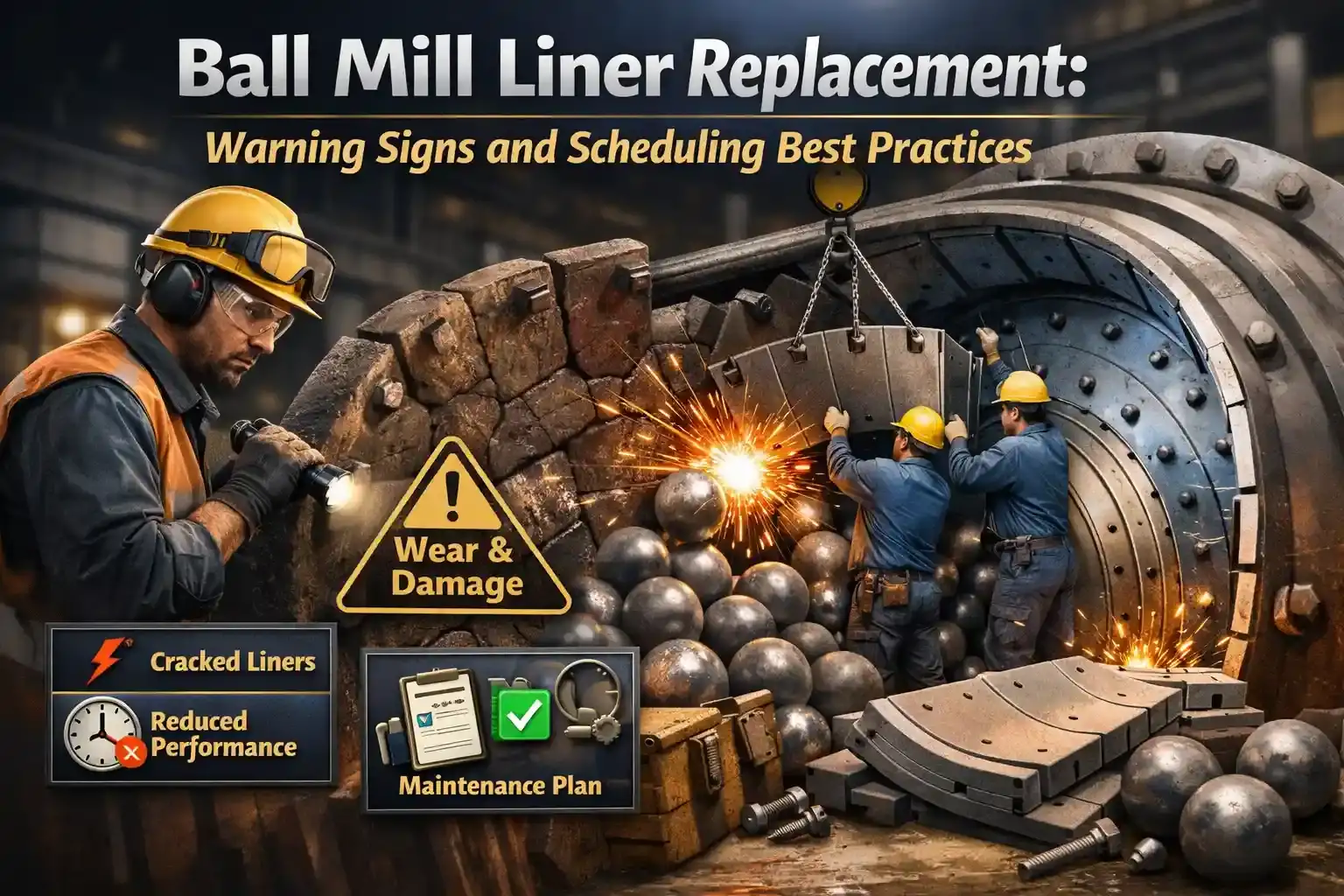
Every day, ball mills do hard work. Liners in each mill ensure that the shell is not damaged by constant impact and wear. These liners deteriorate with time. Failure to change them at the proper time can cause greater harm, reduced production, and increased repair costs for your mill. This guide covers indicators to look for and how to plan liners for replacement best.
Liners are no small part of the mill. They prevent the steel shell from being damaged by grinding media and impact. If liners aren't in good shape, the shell itself is damaged, and that's expensive as opposed to changing liners.
A worn liner doesn't just look bad. It affects the grinding process of a mill. Thin or damaged liners cause grinding balls to hit the shell directly, leading to inefficiency, noise, and vibration.
With time, worn liners waste more energy as well. This will cause the mill to do more work for the same quantity of material, thereby increasing your power cost. There is a direct correlation between liner health and the overall running cost of your plant.
Does Liner Wear really cost that much?
Indeed, worn liners involve higher energy consumption and reduced output. They can also sustain damage to the shells that can be a very costly repair. The early detection of wear always saves money in the long term.
If you know early enough, you can save from the sudden mill stoppage. Look for these signs as they are the most likely to indicate a need for action.
Unusual Noise or Vibration
When the mill runs normally, it follows a regular sound. Sudden banging, rattling, or vibration pattern change usually indicates a thinned-out liner or a liner unlocked from its bolts.
If installed, vibration sensors can detect this in the early stages. However, an expert operator may realize the change in sound before anything else without sensors, even.
Drop in Grinding Efficiency
If the mill will grind the same batch of material slower, or at a lower quality, it may indicate that the liners have worn. When lifter bars are damaged, they fail to lift the grinding media as intended, reducing the impact force on the material.
Sometimes this may be slow, and it helps to monitor the grinding time and output over a period of weeks, not only days. All things change a little day by day.
Visible Cracks or Broken Sections
Frequently inspect liners during routine shutdowns. If cracks or holes appear or pieces have come off, it's time to replace it soon. Failure to address visible damage can pose a sudden liner failure during operation.
Increased Metal Contamination in Product
If any small piece of metal finds its way into your ground material, it is usually caused by a failing liner or lifter bar. It is a serious sign and shouldn't be neglected, as it has a direct impact on product quality.
People don't think enough about having regular checks. Problems are not always detected until a scheduled shutdown arrives; by then, they are a serious matter.
Daily and Weekly Checks
Noises should be listened for every day by the operator. Early signs of wear or tear can be detected by visual inspection at the inspection ports every week, without the need for a total shutdown.
Scheduled Full Inspections
A thorough inspection of the inside of the mill should be performed every few months, depending on the number of hours it is used. This also involves stopping the mill and measuring the thickness of the liner at several points, not just one.
Correct replacement of a liner ensures predicted downtime. The cost of last-minute or random replacement is higher in production time.
Track the wear rate with time.
Record the thickness of the liners at each inspection. This allows you to determine when the liners will have the minimum safe thickness, which can then be planned for a liner replacement date.
Scheduling around the plan.
Plan liner replacement for times other than high flow production. This prevents a downturn in output due to high demand.
Keep Spare Liners in Stock
In case of emergency replacement, the delay is caused by running out of stock of liners. Maintain a reasonable stock of liners according to the average wear of your mill.
Should Liners Be Changed Early or Late?
It's better to change liners a little prematurely rather than letting them fail. Failure of liners can ruin the mill shell, and the cost of a repair will exceed the liner itself.
The longevity and cost depend on the liner material used. These are usually used forms of materials, such as manganese steel, chrome-moly steel, and rubber composites, each with different grinding conditions.
Steel Liners vs Rubber Liners
Steel liners can withstand heavy impacts and are suitable for larger grinding media. Rubber liners are lighter, quieter, and sometimes applied in less abrasive materials. The selection to use is determined by the grinding you will be performing.
Matching Liner Design to Mill Type
Lifter bar height and the size and shape of the liners need to be matched to the mill speed and the media size to be used. If the material is good, but the design is poor, it will wear out faster.
Selecting a quality liner supplier is every bit as important as specifying the liner material. A consistent supplier supplies consistent quality, appropriate certification, and on-time delivery for your replacement schedule.
Inquire with suppliers regarding their manufacturing process and material testing reports. A good supplier should readily provide you with these details and assist you in selecting the optimum liner design for your mill type.
With a planned replacement process, there is less downtime and a safer job for workers involved.
Safety Preparation
Ensure the mill is completely locked out and cooled down before removal. Good safety measures are implemented during the actual removal of old liners to eliminate accidents.
Removing Old Liners
Old liners should be carefully removed, inspecting the shell area and bolt holes for damage needing repair.
Installing New Liners
The correct torque and alignment must be applied to new liners. While the liner material may be good, poor installation can result in early failure.
Post-Installation Checks
Once installed, run the mill at a lighter load initially to detect any abnormal noise or vibration and then at regular production speed.
Besides avoiding breakdowns, there are several benefits to replacing liners in a timely fashion.
· Less energy use while grinding.
· Advanced and stable product quality
· Lower chances of shell damage.
· Fewer unplanned shutdowns
· Longer life of the mill.
All these benefits accumulate over time, and a planned sequence of liner replacements can be a long-term smart investment for any plant.
Ball mill liners are indeed small components of a mill when compared to the rest of the equipment, but they have a major role in the smooth running of your mill. Signs such as efficiency losses, noises, and cracks are considered warning signs when looking for signs of wear. Preplanning the replacement is cheaper and guards equipment from failure in the long run.
1. Where should I buy ball mill liners in bulk for my plant business?
Ball mill liners are available in bulk quantities from trusted industrial suppliers and manufacturers. When ordering in bulk, make sure to verify their certification and ask for material test reports.
2. Where to purchase a ball mill liner in bulk at low prices?
Check prices from a couple of reputable manufacturers and ask about pricing for various quantities. You can expect lower prices by purchasing directly from the manufacturer, rather than from a distributor.
3. Where can I find a ball mill liner supplier who also offers customization?
Most Liner manufacturers will customize size, shape, and material grade according to your mill specification. Talk to them directly about how you want the lifter bar customized in your first discussion.
4- Is there any bulk ball mill liner supplier that provides customization at a low price?
Yes, there are a few manufacturers that provide bulk supply and customization services simultaneously, particularly in the case of bulk and repeat orders. A higher order volume can often result in competitive pricing.
5. How do I know if a ball mill liner supplier is reliable?
Request other certificates of manufacturing, material test reports, and references from other factories that have used their liners. A good supplier will provide this information freely and offer technical advice for your mill type.
Every day, ball mills do hard work. Liners in each mill ensure that the shell is not damaged by c
READ FULLOne overlooked factor in
READ FULL

Have a question or need a quote? Fill out this form and our team will get back to you quickly!