



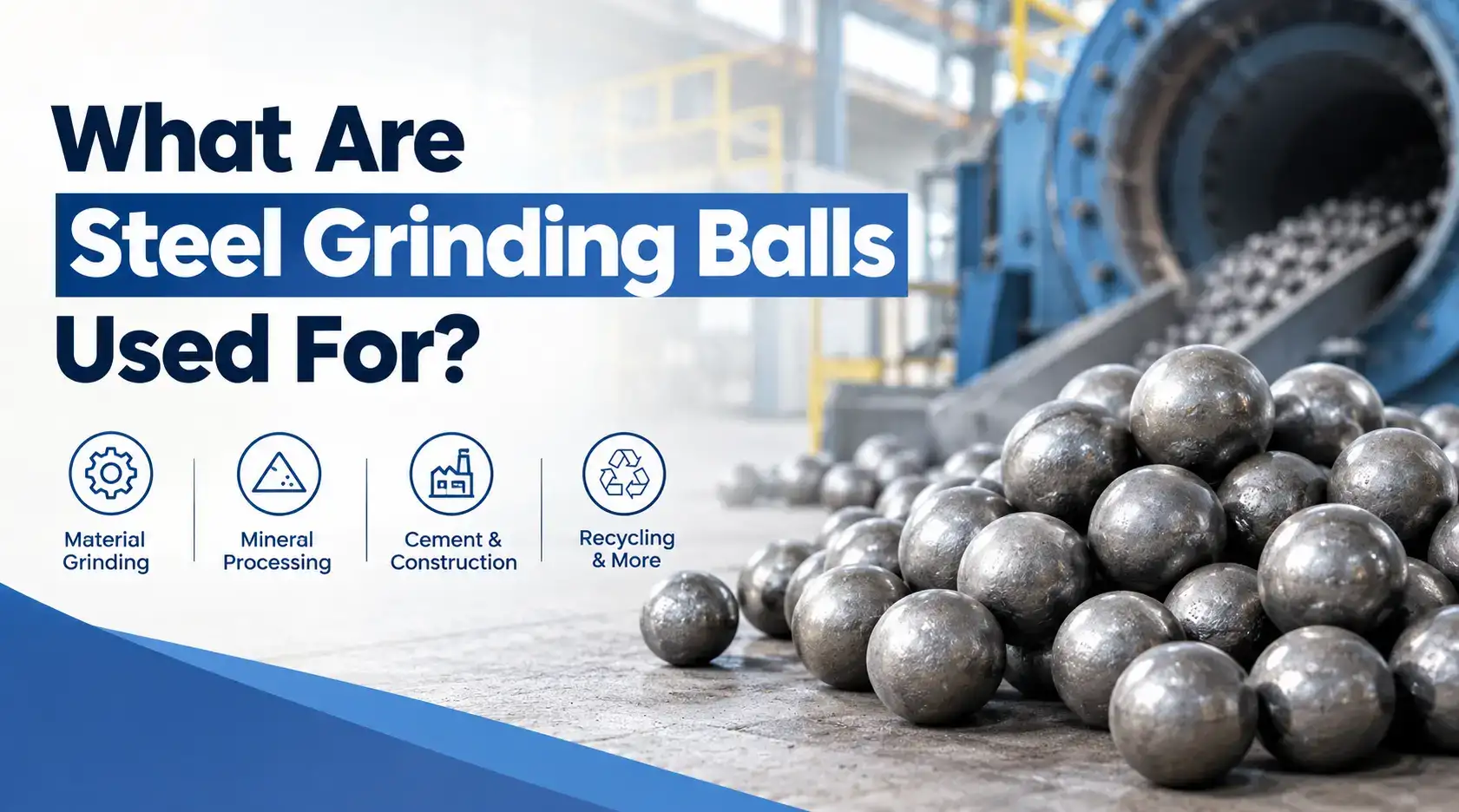
· Steel grinding balls range from 15mm to 150mm in diameter.
· They are used in ball mills in mining, cement, and power plants.
· Chrome content usually ranges from 1% to 30%, depending on the desired hardness.
· Wear rates range from 30 – 1000 grams per tonne of material ground.
· Select ball hardness based on the ore type and mill speed.
The steel grinding ball is an essential component of the industrial grinding mill. They break and grind raw material in a rotating ball mill. They are used extensively in industries for particle size reduction on a large scale. This guide covers the most common applications, material grades, and what to review before sourcing. Major industries use sizing, hardness, and wear-rate benchmarks.
Mining is the largest end-use sector for steel grinding balls. Ore is first milled to fine powder using ball mills before minerals can be extracted. Copper, gold, iron, and zinc processing plants use grinding media. The balls used here are usually in the range of 60mm to 150mm. High-chrome balls containing 10%-30% chrome can withstand abrasive wear produced by hard ore bodies.
Wear rate is influenced by ore hardness and the operating speed of the mill. The standard high chrome balls have a wear rate of 300 g- 600 g per ton of ore. This can be reduced to less than 250g per ton using premium alloy balls. Less wear means fewer replacements and lower operating costs over time.
Grinding balls are used in cement plants to grind clinker into fine cement powder. Here, ball sizes range from 17mm to 90mm, depending on the mill chamber design. In staged grinding, the ball size of a cement mill may consist of two or more sizes in a single chamber. Medium chrome balls (3% to 8% chromium) provide a compromise between cost and wear resistance for this application.
Efficient grinding directly contributes to the fineness of the cement and production throughput. Low-quality balls lead to uneven wear and to varying particle sizes. The usual target of cement producers for wear is less than 100g/ton. Cement Grade Media balls typically should be between 58 and 64 HRC.
Grinding balls are used in coal-fired power plants to grind coal before combustion. Fine coal powder burns better, resulting in better boiler performance. The balls used here are 40mm to 60mm, smaller than those used in common mining applications. The common cause for low chrome balls is that coal is softer than metal ore, which is commonly around 1% to 3% chromium.
Grinding ball suppliers must be ISO 9001 certified for power plants. Otherwise, some will also require ASTM A532 Certification for alloy verification. Buyers should request documentation of chemical composition and hardness to confirm each batch, along with mill test certificates.
For processing fine materials, a chemical plant adopts smaller grinding balls, usually 15mm to 40mm. Applications involve grinding of paint pigments, ceramic materials, and industrial mineral fillers. Stainless steel balls are often used here because they avoid contamination in sensitive chemical processes.
There are two common ways to make grinding balls: forged balls and cast balls. The forged balls are then hot forged and quenched to create denser and more wear-resistant media. Cast balls are cheaper but wear more quickly because they are cast into molds and then cooled. Forged balls are typically 15-25% more expensive, but last much longer in high-impact applications.
Forged balls are typically used in high-impact grinding operations, such as those used in the mining and cement sectors. Cast balls are less expensive and are used in lower-intensity applications, such as chemical processing. The first cost and wear of the mill should be considered when purchasing.
Grinding ball hardness is measured in HRC (Rockwell C scale). Standard ranges are 45 HRC for low-chrome balls and 65 HRC for premium, high-chrome balls. Chromium content directly affects hardness and wear resistance. Sometimes manufacturers add manganese and molybdenum to improve toughness and reduce brittleness during impact operation.
The grinding ball size and hardness will directly impact mill throughput and energy consumption. Coarse material impacts better with larger balls. Smaller balls allow for higher surface contact for fine grinding.
Ball size is dependent upon the material being ground and mill diameter. The grinding fineness of coarse ore is generally 80 mm- 150 mm balls. For fine grinding, 15mm to 40mm balls are used to achieve fine surface contact.
The lifespan depends on wear rate, ore hardness, and ball quality. High-chrome forged balls operating in mining last 6 to 12 months. Lower-grade cast balls may have to be changed every 2-4 months.
· It is important to know that buyers of grinding balls for mining or cement production should consider a few points before purchase. Chemical composition reports verify that chromium, carbon, and manganese content conforms to order specifications. Ask for third-party lab testing to verify hardness for high chrome grades over 15% Chrome.
· The standard grinding ball consumption minimum order quantity begins at 20 tons. Minimums may be higher (as much as 40- 50 tons) for custom sizes or alloy blends. Typical lead times are 30–45 days for standard orders, and longer for custom alloy formulations.
· For bulk shipments, packaging is also important. Standard export packaging typically uses steel drums or bulk bags with a capacity of 1 to 2 tons each. Ensure balls are coated with rust prevention during transit through humid climates or long distances.
· Sometimes grinding balls are bought depending on the price per ton only. This doesn't account for changes in wear rate over time, which can impact total cost. A ball that is cheaper, but wears twice as fast, can end up costing more over the course of its lifespan.
· One of the other mistakes is not considering the mill. The ball's diameter and hardness must match the existing mill liner and design. When the media is not properly matched, it increases liner wear and reduces overall grinding efficiency.
· Also ask buyers about the heat treatment process. The balls crack under impact stress when not quenched properly, causing unexpected downtime. Before placing large orders, ask for documentation of the production process, such as the tempering and the quenching temperature.
· Last but not least, always order samples before committing to buying in bulk. Verify wear-rate and hardness claims through actual mill application. This will help avoid quality problems when full container orders come in.
Steel grinding balls have important applications in the mineral, cement, power plant, and chemical industries. Material characteristics, size, and hardness all affect performance and cost. Buyers are required to ensure that the balls being bought are appropriate for their mill conditions and that supplier certifications are appropriate for bulk orders.
What are the wholesale suppliers of steel grinding balls that offer bulk discounts?
Manufacturers that offer tonnage pricing usually give discounts at the 20-ton, 40-ton, and 50-ton marks.
How much does it cost for a bulk order of forged balls versus cast balls?
The price of a forged ball is usually 15-25% higher per ton than a cast ball of similar bulk volume.
Who provides bulk orders of grinding balls in addition to their custom ball alloy?
A manufacturer with its own foundry or heat-treatment shop usually offers both services: bulk pricing and custom alloy services.
What is the tonnage required for a typical batch for a ball grinding ball wholesale?
Typical minimum order quantities are 20 tons of standard alloy and size or 40-50 tons of custom alloy and size.
Every day, ball mills do hard work. Liners in each mill ensure that the shell is not damaged by c
READ FULLOne overlooked factor in
READ FULL
Have a question or need a quote? Fill out this form and our team will get back to you quickly!